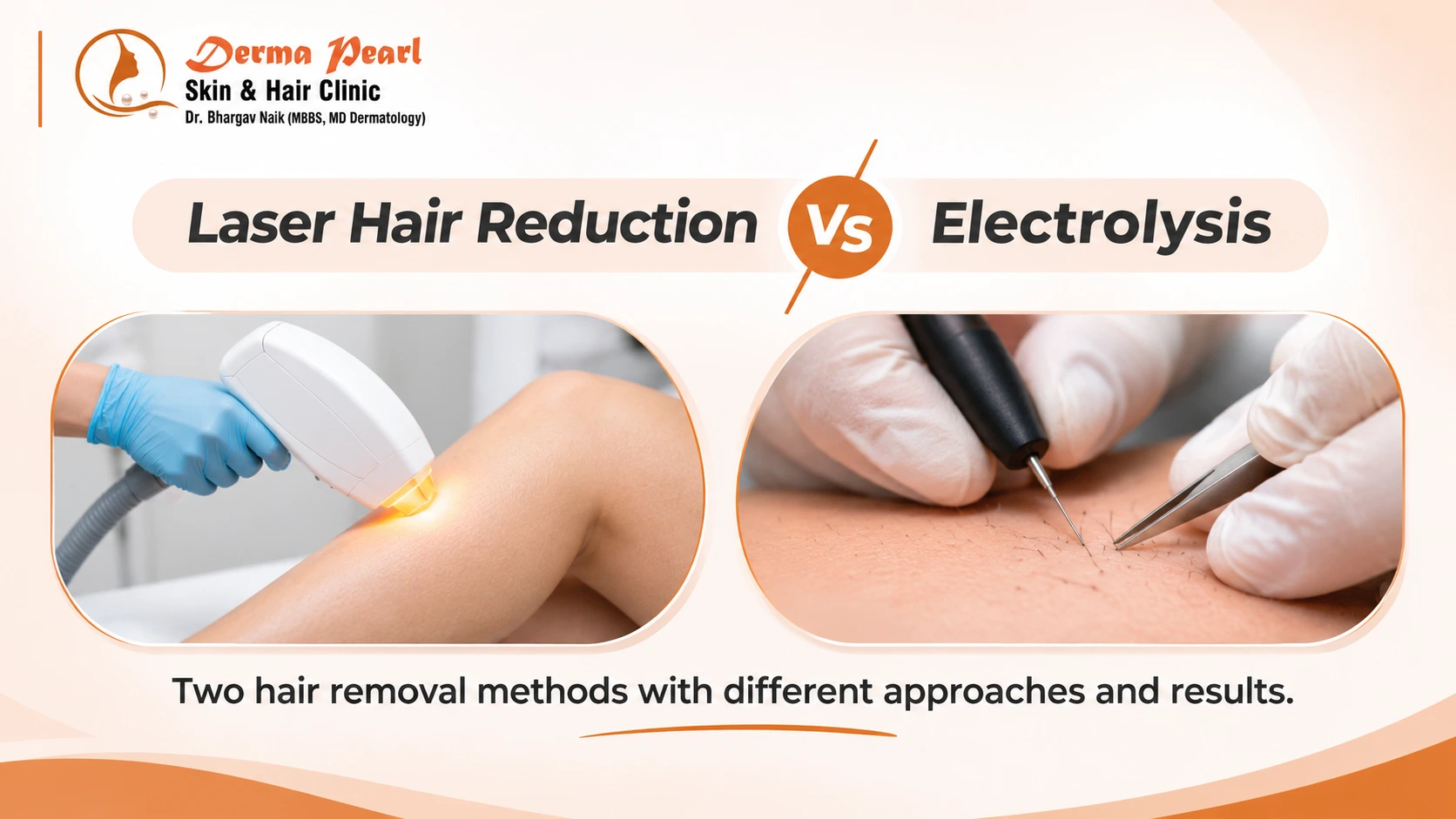
Laser hair reduction and electrolysis are two methods used to reduce unwanted hair growth, but they work differently and may suit different needs. Laser hair reduction uses concentrated light to target pigment in hair follicles and is commonly used to treat larger areas, while electrolysis uses an electrical current to treat individual hair follicles. The results, number of sessions, suitability for different hair colours, and potential side effects vary between these methods. Comparing their key differences can help individuals discuss suitable options with a qualified dermatologist or trained practitioner.
|
Feature
|
Laser Hair Reduction
|
Electrolysis
|
|---|---|---|
|
How it works
|
Uses concentrated light absorbed by hair pigment to heat and damage hair follicles, reducing future growth.
|
Uses an electrical current delivered through a fine probe inserted into an individual hair follicle to destroy its growth-producing tissue.
|
|
Main Purpose
|
Reduces unwanted hair growth over larger areas of the body.
|
Removes unwanted hairs individually and can achieve permanent hair removal of treated follicles.
|
|
Common Treatment Areas
|
Legs, arms, underarms, back, face and bikini area, depending on suitability.
|
Facial hair, chin, upper lip, eyebrows and other areas where individual hair removal is required
|
|
Suitability for Hair Colour
|
Generally works best on pigmented hair. Blonde, white, grey and some red hairs may respond poorly to conventional laser treatment.
|
Works across different hair colours, including white, grey, blonde and red hair.
|
|
Suitability for Skin Tone
|
May feel like small snaps, heat, or mild discomfort during treatment
|
Can be used across different skin tones, although individual skin characteristics and treatment risks must be assessed.
|
|
Treatment Area
|
Can treat multiple hairs across a relatively large area during one session
|
Treats individual hair follicles, making it more suitable for small areas or scattered hairs.
|
|
Number of Sessions
|
Usually requires multiple sessions because hair grows in different cycles.
|
Usually requires multiple sessions because individual follicles must be treated as hairs enter suitable growth stages.
|
|
Session Duration
|
Often quicker for larger areas because multiple follicles are treated at once.
|
Generally takes longer for larger areas because each follicle is treated individually.
|
|
Results
|
Provides long-term hair reduction; some regrowth and maintenance sessions may occur.
|
Can permanently remove successfully treated follicles, although additional sessions may be needed for hairs that were not fully treated or become visible later.
|
|
Pain or Discomfort
|
May feel like a brief snapping sensation, warmth or stinging. Comfort varies with the treatment area and device.
|
May cause stinging, tingling or discomfort during individual follicle treatments.
|
|
Potential Side Effects
|
Temporary redness, swelling and irritation may occur. Burns, blisters and pigmentation changes are possible, particularly with inappropriate settings or technique.
|
Temporary redness and irritation may occur. Infection, scarring and pigmentation changes are possible if treatment is performed incorrectly.
|
|
Recovery Time
|
Often involves minimal downtime, although temporary skin reactions may occur.
|
Usually involves minimal downtime, but the treated skin may remain red or sensitive temporarily.
|
|
Preparation
|
May involve avoiding tanning, limiting sun exposure and shaving the treatment area as instructed. Waxing and plucking are generally avoided before treatment.
|
Usually involves keeping the treatment area clean and following the practitioner's instructions regarding skin care and hair preparation.
|
|
Aftercare
|
Follow sun-protection instructions and avoid irritating products or excessive heat until the skin settles.
|
Keep the area clean and follow instructions for avoiding irritation, excessive sweating and other activities that may affect healing.
|
|
Cost Considerations
|
The total cost depends on the treatment area, number of sessions, equipment and provider.
|
The total cost depends on the number of hairs treated, session duration and number of visits required.
|
|
Maintenance
|
Occasional maintenance sessions may be needed to manage regrowth.
|
Routine maintenance may not be needed for follicles successfully destroyed, although other hairs can still emerge or require treatment.
|
|
Who May Benefit More?
|
May suit people seeking reduction of coarse, pigmented hair over larger body areas.
|
May suit people seeking removal of individual hairs or treatment of light-coloured hairs that do not respond well to laser.
|
|
Which Method Is Better?
|
May be more practical when treating a large area and reducing overall hair growth.
|
May be more suitable when targeting individual hairs or seeking permanent removal of specific follicles.
|