Blogs
Hair loss can affect men in their twenties and may influence confidence and self-image. A receding hairline, thinning crown, or visible scalp can become frustrating, especially when hair loss progresses despite changes in hair care. Hair transplantation is one option for restoring hair in suitable candidates, but younger men need to consider whether their hair loss has stabilised before undergoing the procedure.
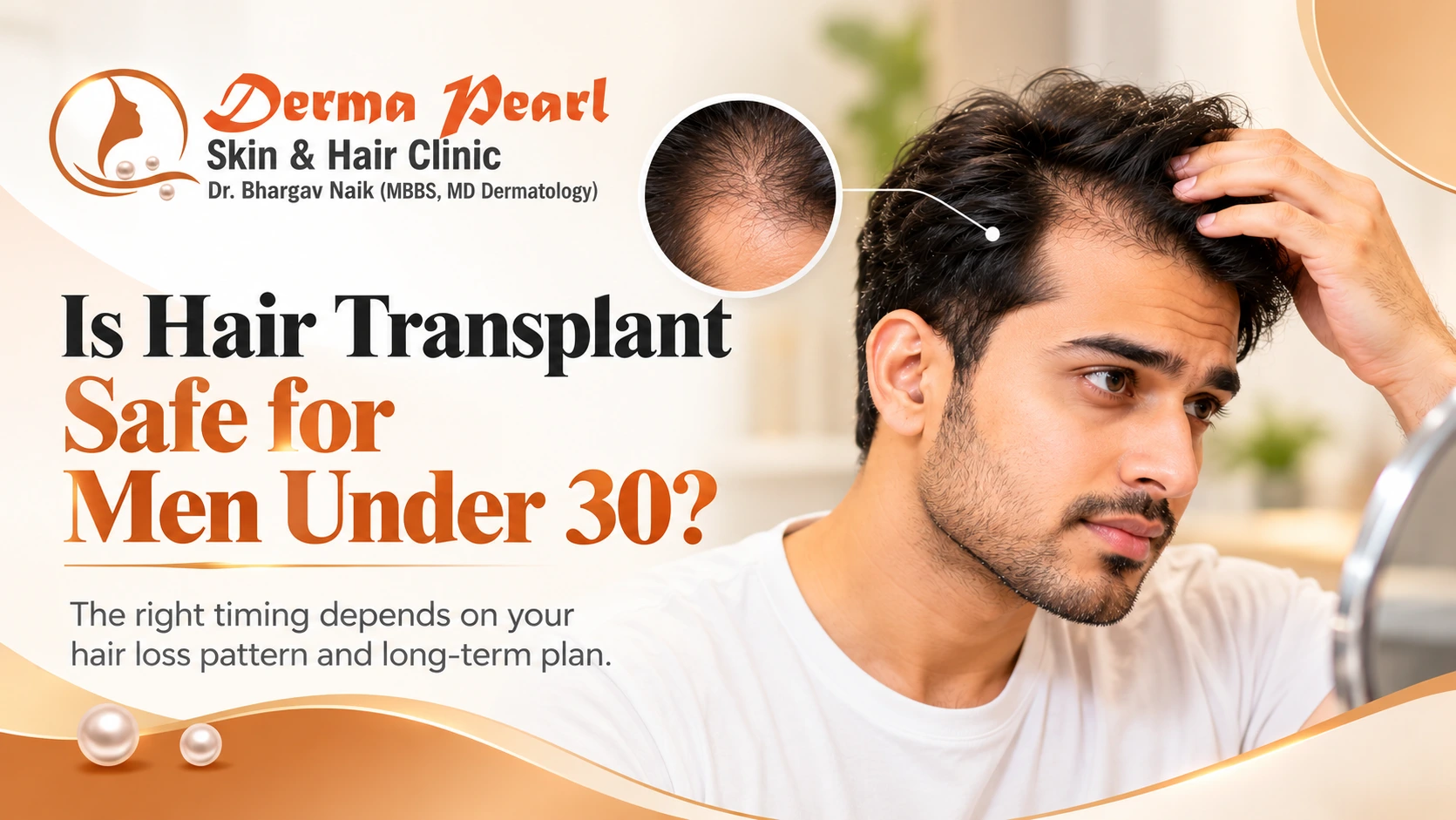
Is hair transplant safe for men under 30? Yes, it can be safe for appropriately selected candidates when performed by a qualified, registered medical practitioner with suitable training and experience. However, age alone does not determine eligibility. The pattern of hair loss, donor hair availability, medical history, and likelihood of future hair loss are important factors when deciding whether to proceed.
Male pattern hair loss, also called androgenetic alopecia, is a common cause of hair thinning in younger men. It is influenced by genetic factors and sensitivity to dihydrotestosterone (DHT), a hormone derived from testosterone. Hair follicles gradually become smaller, producing finer and shorter hair over time.
Other causes include nutritional deficiencies, thyroid disorders, certain medications, scalp conditions, and temporary hair shedding after illness or physical stress. Some forms of hair loss may improve when the underlying cause is treated.
Before considering a transplant, a dermatologist should assess the type and pattern of hair loss. A hair transplant redistributes existing hair follicles; it does not stop the underlying process of male pattern hair loss.
Hair transplantation can be an appropriate option for some men under 30, but careful assessment is particularly important at this age. Hair loss may still be progressing, and a transplant performed too early can create an unnatural appearance as the surrounding hair continues to thin.
A suitable candidate generally has a clearly diagnosed cause of hair loss, adequate donor hair, and realistic expectations about the results. The procedure should be planned around both the current hairline and the possibility of future hair loss.
A medical assessment should also consider scalp health, existing medical conditions, medications, and factors that may affect healing. No surgical procedure is completely risk-free, and individual outcomes vary.
There is no single age at which every man becomes eligible for a hair transplant. Many surgeons prefer to assess younger patients carefully and may recommend delaying surgery when hair loss is rapidly progressing.
For men in their early twenties, monitoring hair loss and considering medical treatment may be more appropriate than immediate surgery. Men in their late twenties may be suitable candidates if their diagnosis, donor supply, and long-term hair restoration plan support the procedure.
The decision should be based on clinical suitability rather than a birthday or a fixed age limit.
When hair loss is still progressing, transplanted hair may remain while the surrounding natural hair continues to thin. This can create gaps behind the transplanted area and may lead to additional procedures in the future.
A dermatologist may recommend monitoring the pattern of hair loss and considering appropriate medical treatment before surgery. Stabilising hair loss, when possible, can help support a more consistent long-term appearance.
Hair transplantation typically uses follicles taken from a donor area, usually at the back or sides of the scalp. These follicles are moved to areas affected by thinning or baldness.
Donor hair is limited. Using too many grafts at a young age may reduce the supply available for future procedures if hair loss continues. A suitable treatment plan should preserve donor hair and account for possible changes in the hairline over time.
Follicular Unit Extraction (FUE) involves removing individual follicular units from the donor area and implanting them into the recipient area. Follicular Unit Transplantation (FUT) involves removing a strip of scalp from the donor area and separating it into follicular units for transplantation.
Both techniques have potential benefits and limitations. FUE may leave small dot-like scars, while FUT generally leaves a linear scar. The choice depends on donor characteristics, the number of grafts required, hairstyle preferences, and medical assessment. Neither technique guarantees a particular density or outcome.
Hair transplantation is generally performed as a surgical procedure under local anaesthesia, but complications can occur. Temporary swelling, tenderness, redness, scabbing, and numbness may develop during recovery. Some transplanted hairs typically shed before new growth begins.
Less common complications include infection, bleeding, scarring, poor graft growth, changes in skin sensation, and an unnatural hairline. Shock loss, which refers to temporary shedding of existing hair following the procedure, may also occur. In some cases, hair may not grow as expected or the result may be less dense than anticipated.
The risk of complications depends on individual health, surgical planning, technique, and aftercare. Choosing a qualified medical practitioner and following postoperative instructions can help reduce avoidable risks.
Before proceeding, men should undergo an assessment to establish the cause of hair loss and determine whether surgery is appropriate. A dermatologist may examine the scalp, review family history, assess donor hair, and recommend investigations if another cause of hair loss is suspected.
Medical treatments may help slow male pattern hair loss in suitable patients. Options such as minoxidil or finasteride may be considered after reviewing their benefits, limitations, and potential adverse effects with a qualified medical practitioner. These treatments are not suitable for everyone, and their effects generally require continued use.
It is also important to have realistic expectations. A transplant can improve hair coverage, but it cannot recreate unlimited hair density. Results take time, and visible growth usually develops gradually over several months. The final outcome may take around 9–12 months or longer, depending on the individual and treatment area.
Following the prescribed aftercare plan is essential during recovery. Keep the scalp clean as instructed, avoid rubbing or scratching the treated area, and follow medical advice about washing, exercise, and sun exposure.
Long-term management may also involve monitoring natural hair loss and using recommended treatments when appropriate. Transplanted hair does not prevent untreated, non-transplanted hair from thinning in the future. Regular follow-up can help assess healing, growth, and any ongoing hair loss.
Hair transplantation can be safe for selected men under 30, but early surgery is not suitable for everyone. The stability of hair loss, donor hair availability, medical history, and long-term treatment goals should guide the decision. A thorough assessment by a qualified dermatologist or appropriately trained medical practitioner can help determine whether transplantation is suitable or whether medical treatment and monitoring should come first.
Yes, a 25-year-old may be eligible if the cause of hair loss is established, donor hair is adequate, and the treatment plan accounts for future hair loss. Age alone does not determine suitability.
No. A transplant moves hair follicles to thinning areas but does not stop the underlying progression of male pattern hair loss. Medical treatment may help preserve existing hair in suitable patients.
FUE can be suitable for younger men after proper assessment. However, it carries potential risks such as infection, scarring, poor graft growth, and an unnatural appearance if hair loss continues.
Transplanted hairs commonly shed during the early weeks, followed by gradual regrowth over the following months. Noticeable results often develop over 6–9 months, with fuller results taking around 9–12 months or longer.
Yes. Existing non-transplanted hair may continue to thin, and temporary shock loss can occur. Appropriate planning and ongoing management may help reduce the impact of future hair loss.
A dermatologist may recommend medical treatment and monitoring before surgery, particularly if hair loss is progressing. The appropriate option depends on the diagnosis, medical history, and potential benefits and risks of treatment.