
Comparison of Laser Hair Removal vs Waxing
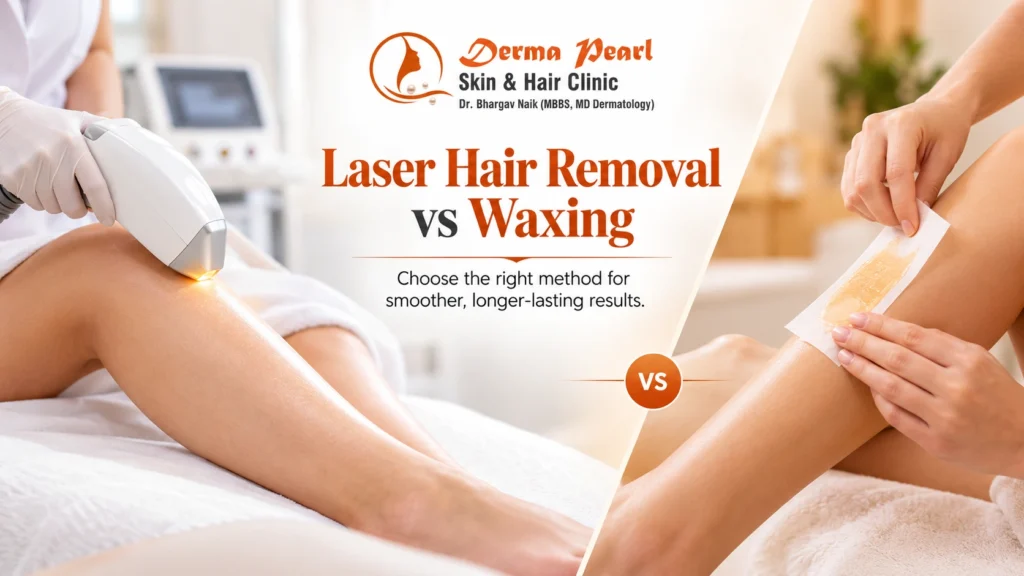
Comparison of Laser Hair Removal vs Waxing Unwanted body hair is common, and there are several ways to remove it depending on personal preferences, skin type, hair growth, budget, and desired results. Laser hair removal and waxing are two popular options, but they work in very different ways. Waxing removes hair from the root using heated or cold wax, while laser hair removal uses concentrated light energy to target hair follicles and gradually reduce hair growth over multiple sessions. When comparing Laser Hair Removal vs Waxing, it is important to consider more than just how quickly the hair disappears. Factors such as results, discomfort, frequency of treatment, skin irritation, cost, and long-term hair reduction can influence which option may be more suitable. Waxing can provide smooth skin for several weeks, while laser hair removal is designed to provide long-term reduction in hair growth rather than temporary removal. Feature Laser Hair Removal Waxing How it works Uses concentrated light energy to target hair follicles Uses wax to pull hair out from the root Main goal Long-term reduction in hair growth Temporary hair removal How long results last Hair growth can be reduced significantly after a series of treatments, though maintenance may be needed Results commonly last for a few weeks Number of sessions Requires multiple sessions because hair grows in different cycles Repeated whenever the hair grows back Pain or discomfort May feel like small snaps, heat, or mild discomfort during treatment Can cause brief pulling or stinging as the wax is removed Skin irritation Temporary redness or swelling around follicles can occur Redness, irritation, ingrown hairs, or bumps may occur Hair regrowth Regrowth may become finer and less noticeable over time Hair grows back after the follicle produces a new hair Effect on hair follicles Targets the follicle to reduce future hair growth Removes the existing hair but does not permanently disable the follicle Preparation Usually requires avoiding waxing or plucking before treatment; shaving may be recommended Hair needs to be long enough for the wax to grip effectively Cost Higher upfront cost because multiple sessions may be required Usually lower cost per session Time commitment Requires a treatment course and occasional maintenance Requires regular appointments or at-home waxing Suitable areas Commonly used on the face, underarms, legs, bikini area, back and other body areas Can be used on many body areas, depending on skin sensitivity Long-term convenience May reduce the need for frequent hair removal Requires ongoing hair-removal sessions Personalized care for Every Skin and Hair Concern. 093266 51151 bhargav30naik@gmail.com
Acne Marks vs Acne Scars
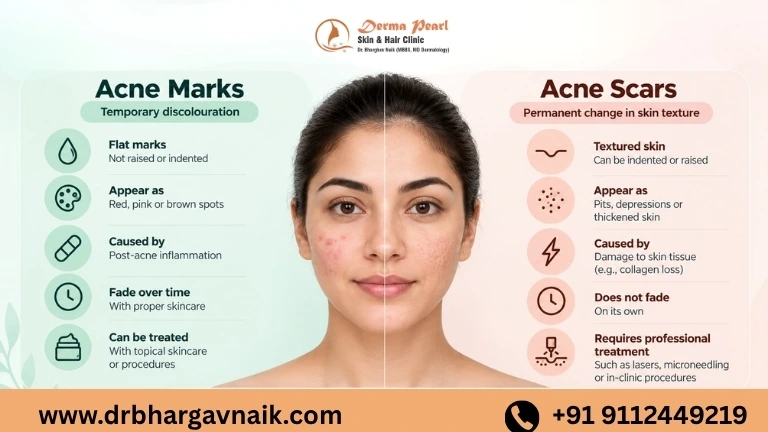
Comparison of Acne Marks vs Acne Scars These two get lumped together a lot, but they’re not the same, and they don’t respond to the same treatments. Acne marks are those flat red, brown, pink, or purple spots left behind after a pimple heals no texture change, and they usually fade on their own over weeks or months with good skincare, sun protection, and ingredients like vitamin C, azelaic acid, or retinoids. Acne scars are a different story. They form when deeper skin layers get damaged and collagen heals unevenly, leaving behind pits, rolling depressions, raised areas, or textural changes and without professional treatment, they tend to stick around. Options like fractional laser resurfacing, microneedling, subcision, TCA CROSS, or dermal fillers can make a real difference here. Treating acne early, resisting the urge to pick, and wearing sunscreen daily go a long way toward preventing both. Figuring out which one you’re actually dealing with is really the first step toward picking the right treatment. Feature Acne Marks Acne Scars Definition Flat discoloration left after a pimple heals. Permanent changes in skin texture causare ed by damage to deeper skin layers. Medical Term Post-Inflammatory Hyperpigmentation (PIH) or Post-Inflammatory Erythema (PIE). Atrophic scars, hypertrophic scars, or keloid scars. Appearance Brown, red, pink, or purple spots on the skin. Depressed pits, rolling skin, raised scars, or uneven texture. Skin Texture Smooth and level with the surrounding skin. Uneven, indented, or raised skin surface Cause Excess pigment or redness after inflammation. Loss or excess production of collagen during healing. When It Develops After acne inflammation settles. After severe or deep inflammatory acne heals. Severity Mild cosmetic concern. Moderate to severe skin damage. Permanent or Temporary Usually temporary. Often permanent without treatment. Natural Healing Gradually fades over weeks to months. Rarely improves completely on its own. Healing Time Few weeks to several months. Months to years if untreated. Pain or Discomfort Generally painless. Usually painless but may affect skin appearance. Who Is More Likely to Get It? Anyone after acne, especially darker skin tones. People with severe, cystic, or long-standing acne. Risk Factors Picking pimples, delayed treatment, sun exposure. Deep acne, delayed treatment, squeezing pimples, genetics. Diagnosis Clinical skin examination. Clinical examination to determine scar type and depth. Sun Protection Clinical examination to determine scar type and depth. It is important to protect healing skin and improve treatment results. Can It Return? New marks can develop if acne continues. New scars form only if new severe acne develops. Personalized care for Every Skin and Hair Concern. 093266 51151 bhargav30naik@gmail.com
Chemical Peel vs Laser Treatment
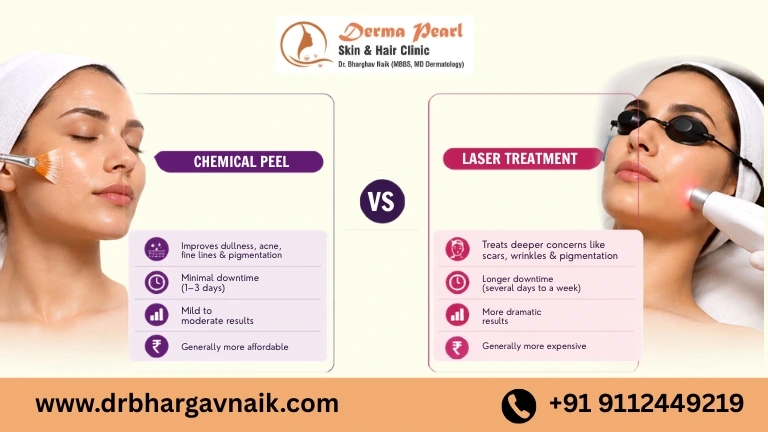
Comparison of Chemical Peel vs Laser Treatmen Both treatments can do wonders for your skin’s appearance and texture but in very different ways. Good for mild pigmentation, acne, dullness or fine lines, a chemical peel uses medical-grade acids to exfoliate away damaged layers and encourage new skin to grow in its place. Laser therapy uses focused energy from light to penetrate deeper, stimulating collagen and tackling more difficult problems such as acne scarring, wrinkles, large pores and stubborn pigmentation. Peels tend to be lighter on the wallet and quicker to sit through, though you might need a few sessions to really see results. Lasers usually cost more but can make a bigger dent in deeper concerns with fewer visits. Recovery time really depends on the peel strength or laser type you go with, and either way, good sun protection and proper aftercare are non-negotiable. Which one’s right for you comes down to your skin type, your specific concerns, and what a dermatologist recommends after actually examining your skin. Feature Chemical Peel Laser Treatment Definition A skin resurfacing procedure that uses a chemical solution to remove damaged outer skin layers. A skin treatment that uses focused light energy to improve skin texture, tone, and appearance. Technology Used Medical-grade acids such as glycolic acid, salicylic acid, TCA, or phenol. Laser energy such as fractional CO2, Erbium, or Q-switched lasers. How It Works Exfoliates the skin, stimulates new skin growth, and improves skin renewal. Creates controlled heat or microscopic injuries to stimulate collagen production and skin repair. Best For Mild pigmentation, acne, dull skin, uneven skin tone, fine lines, and superficial acne scars. Deep acne scars, wrinkles, pigmentation, enlarged pores, skin tightening, and skin rejuvenation. Skin Layers Treated Superficial, medium, or deep skin layers depending on peel strength. Surface and deeper skin layers depending on the laser type. Common Types Superficial, medium-depth, and deep chemical peels. Fractional CO2, Erbium, Pico Laser, Nd:YAG, Q-Switched, IPL (non-laser light therapy). Suitable Skin Concerns Acne, melasma, sun damage, pigmentation, rough skin, mild aging. Acne scars, wrinkles, pigmentation, birthmarks, vascular lesions, skin laxity. Treatment Time Approximately 20–45 minutes. Approximately 30–90 minutes. Number of Sessions Usually 3–6 sessions for best results. Usually 2–6 sessions depending on the condition and laser type. Downtime Minimal with light peels; medium and deep peels may require several days to two weeks. Mild to moderate discomfort; numbing cream is commonly used. Pain Level Mild burning or tingling sensation. Varies from 2–14 days depending on the laser intensity. Anesthesia Generally not required for superficial peels; deeper peels may require local anesthesia Topical numbing cream or local anesthesia for stronger laser procedures. Results Appear Within a few days to two weeks as the skin heals. Gradual improvement over several weeks as collagen develops. Longevity of Results Long-lasting with proper skincare and sun protection. Long-lasting, especially when combined with maintenance treatments and sun protection. Suitable Skin Types Most skin types with the appropriate peel selected by a dermatologist. Most skin types, though laser selection depends on skin tone and condition. Recovery Care Moisturizer, sunscreen, gentle skincare, and avoiding skin picking. Sunscreen, moisturizers, gentle skincare, and avoiding direct sun exposure during healing. Risk of Pigmentation Possible, especially after deeper peels or inadequate sun protection. Possible, particularly in darker skin tones if incorrect laser settings are used. Common Side Effects Redness, peeling, dryness, temporary sensitivity Redness, swelling, temporary crusting, mild discomfort, temporary pigmentation changes. Ideal Candidates People seeking brighter skin, improved pigmentation, mild acne scars, or smoother texture. People with deeper scars, wrinkles, significant pigmentation, or advanced skin aging. Cost Generally lower than laser treatments. Usually higher because of advanced technology and equipment. Maintenance Periodic peel sessions and a consistent skincare routine. Maintenance sessions may be recommended depending on the skin concern. Expected Outcome Fresher, brighter, smoother, and more even-toned skin. Improved skin texture, scar reduction, wrinkle reduction, firmer, younger-looking skin. Doctor Recommendation Selected based on skin type, concern, and desired recovery time. Chosen according to skin condition, treatment goals, and suitability after dermatologist evaluation. Personalized care for Every Skin and Hair Concern. 093266 51151 bhargav30naik@gmail.com