
Hair Fall Treatment: Stop Hair Loss & Regrow Stronger Hair Fast
Blogs Hair Fall Treatment: Causes, Remedies, and Effective Solutions for Stronger Hair Hair fall… almost everyone deals with it at some point. Some people notice it while combing, some see it in the shower, and some just feel like their hair has become thinner than before. It can be scary honestly, but in many cases it’s treatable. With the right hair fall treatment, you can slow it down and even improve hair growth over time. Introduction to Hair Fall Understanding Hair Fall and Hair Thinning So first thing — hair fall is normal. Yes, really. Our hair grows in cycles. Some hair grows, some rests, and some falls out. That’s part of the process. But when more hair falls and less grows back, that’s when thinning starts happening. Hair thinning doesn’t always mean baldness. Sometimes it’s temporary. Sometimes it’s because of stress, diet, or hormones. And that’s where proper hair fall treatment helps. Normal Hair Shedding vs Excessive Hair Loss On average, losing about 50–100 strands a day is okay. You won’t even notice it usually. But if you’re seeing: Hair all over your pillow Lots o-f strands in the shower drain Thinner ponytail More scalp visible Why Early Hair Fall Treatment Matters Many people ignore hair fall at the start. They think it’ll stop on its own. Sometimes it does, but not always. If you treat it early, the hair roots are still strong and active. That means better chances of regrowth. Waiting too long makes things harder. Major Causes of Hair Fall Genetic and Hereditary Factors If your parents or grandparents had thinning hair or baldness, you might face it too. This is called pattern hair loss. It’s common in men and women both. Doesn’t mean nothing can be done though early care helps a lot. Hormonal Changes and Imbalance Hormones affect everything in the body, including hair. Teen years, thyroid issues, PCOS, pregnancy, menopause all these can trigger hair fall. Sometimes it’s temporary, sometimes it needs treatment. Poor Diet and Nutrient Deficiency Skipping meals, eating mostly junk food, or low iron levels… all this affects hair. Hair needs protein and vitamins to grow. If the body isn’t getting nutrients, hair becomes weak Stress and Lifestyle Triggers Stress is a big one. Exams, work pressure, poor sleep, illness — all can lead to sudden hair fall after a few months. Many people don’t connect stress to hair fall, but it’s real. Scalp Infections and Medical Conditions Dandruff, fungal infections, itchy scalp… these things damage hair roots. If the scalp isn’t healthy, hair won’t grow well. Excessive Styling and Chemical Damage Too much heat styling, straightening, coloring, tight ponytails — all this weakens hair over time. Hair becomes fragile and breaks easily. Different Types of Hair Loss Pattern Baldness in Men and Women This is the most common type. Gradual thinning on top of the head or receding hairline. Happens slowly, not overnight Temporary Hair Loss (Telogen Effluvium) This sounds complicated but it just means sudden shedding after stress, illness, or weight loss. Usually temporary if treated properly. Patchy Hair Loss (Alopecia Areata) Round bald patches on scalp. This needs proper medical care Hair Breakage from Styling Sometimes hair isn’t falling from the root — it’s breaking. Heat and chemicals can cause this. Effective Hair Fall Treatment Options Clinical and Dermatological Treatments Find out what’s causing your hair fall and how to control it. 093266 51151 bhargav30naik@gmail.com Medicated Lotions and Serums Dermatologists often suggest lotions that strengthen roots and slow hair fall. They take time but help when used regularly. Oral Hair Growth Supplements Sometimes the body just needs extra nutrients. Supplements with biotin, iron, and vitamins can help if deficiency is the cause. PRP (Platelet-Rich Plasma) Therapy There are also laser and growth-based treatments that improve scalp health and hair thickness. Hair Transplant Solutions For advanced hair loss, transplant can restore hair permanently. It uses your own hair roots, so results look natural. Natural Remedies for Hair Fall Control Oil Massages for Scalp Health A gentle oil massage improves blood flow and relaxes the scalp. Coconut or almond oil works well. Herbal and Home-Based Treatments Aloe vera, onion juice, or simple hair masks can help support scalp health. They’re not magic cures but can help. Essential Oils for Hair Strength Rosemary oil is popular these days. When used properly (and diluted), it may support growth. Nutrition for Hair Growth Protein Intake for Hair Strength Hair is made of protein. Eggs, dal, paneer, nuts all help. Iron, Zinc, and Vitamin Support Low iron is a common reason for hair fall, especially in women. Green vegetables and fruits help. Hydration and Balanced Diet Drinking enough water matters more than people think. Daily Hair Care Tips to Reduce Hair Fall Choosing Suitable Hair Products Use mild shampoo. Don’t switch products every week. Correct Washing and Conditioning Routine Wash gently. Don’t scrub hard. The conditioner helps prevent breakage. Safe Hair Drying and Styling Habits Avoid too much heat. Let hair air dry when possible Scalp Care and Hygiene Clean scalp = healthier hair. Simple. Hair Fall Treatment for Men Early Signs of Male Hair Thinning Receding hairline and thinning crown are early signs Treatment Plans for Men Topical treatments, PRP, or transplant may be suggested depending on stage. Preventive Hair Care Tips Start early. Don’t wait until hair loss becomes severe. When Should You Visit a Hair Specialist? Signs That Need Medical Attention Heavy hair fall for months, bald patches, or severe thinning – get it checked. PCOS and Thyroid-Related Hair Fall A dermatologist checks scalp and may suggest tests. Personalized Treatment Planning Everyone’s hair fall is different, so treatment should be too. Frequently Asked Questions What is the best hair fall treatment? Depends on the cause. There’s no one solution for everyone How long does it take to see hair regrowth? Usually 3–6 months if treatment is followed properly Can hair fall be reversed naturally?Can hair fall be reversed naturally? Mild hair fall, yes. Severe cases need medical care. Which
Acne Scar Treatment Cost for Clear Skin: Is It Worth It?
Blogs Acne Scar Treatment Cost: What Affects Pricing and Which Options Are Worth It? Many people search for acne scar treatment after their pimples are gone but marks and dents remain. One of the first questions that comes to mind is simple: How much will it cost? The truth is, acne scar treatment cost is not the same for everyone. Some people need only a few sessions, while others need advanced procedures. In this guide, we will explain acne scar treatment cost in very simple language. Even a teenager can understand this. You will learn what affects pricing, what treatments exist, and how to choose the right option without wasting money. Introduction to Acne Scar Treatment Cost Why People Want to Know Acne Scar Treatment Prices Most patients ask about cost before starting treatment. That’s normal. Acne scar treatment often needs multiple sessions, so people want to plan their budget. Knowing the expected cost helps them feel more comfortable and prepared. Understanding the Difference Between Acne and Acne Scars Acne is the pimple. Acne scars are the marks or dents left after the pimple heals. Treating acne is usually cheaper and quicker. Treating scars takes more time and advanced procedures, which is why the cost is different. Why Treatment Cost Varies from Person to Person No two faces are the same. Some people have light marks that fade easily. Others have deep scars that need multiple treatments. The type of skin, scar depth, and number of sessions all affect acne scar treatment cost. Types of Acne Scars That Affect Treatment Cost Ice Pick Scars and Their Treatment Needs Ice pick scars look like tiny deep holes in the skin. They are harder to treat and may need laser or subcision. Because treatment is stronger, cost may be higher. Boxcar Scars and Medium-Depth Scarring Boxcar scars look like small round dents. They are not very deep but still visible. Microneedling or laser treatment is often used. Rolling Scars and Skin Texture Issues Rolling scars make skin look uneven or wavy. These scars often need combination treatments, which can increase the total cost. Pigmented Acne Marks vs Deep Scars Dark spots after acne are easier and cheaper to treat than deep scars. Many people think they have scars when they actually have marks, and this changes the cost a lot. Factors That Influence Acne Scar Treatment Cost Severity and Depth of Scars Mild scars cost less to treat. Deep and old scars need more sessions and advanced technology, so cost increases. Number of Sessions Required Most acne scar treatments need multiple sessions. Some people need 3 sessions, others need 6 or more. Total cost depends on this. Technology or Treatment Method Used Laser, microneedling, PRP, chemical peel – all have different prices. Advanced machines usually cost more but can give faster results. Dermatologist’s Experience and Clinic Setup An experienced dermatologist may charge more, but safety and results are better. A well-equipped clinic also affects pricing. City, Location, and Clinic Reputation Treatment cost in big cities is usually higher than in smaller towns. Rent, equipment, and staff cost more in metro areas. Combination Treatments and Custom Plans Some scars need more than one treatment. A custom plan may change the total acne scar treatment cost. Find out the exact acne scar treatment cost for your skin and get a personalized plan. 093266 51151 bhargav30naik@gmail.com Average Acne Scar Treatment Cost by Procedure Laser Acne Scar Treatment Cost Laser treatment is popular for deep scars. Cost depends on the area treated and machine used. Fractional Laser Pricing Overview Laser treatment is popular for deep scars. Cost depends on the area treated and machine used. Number of Sessions and Total Cost Range Most patients need 3–6 sessions. Total cost depends on how skin responds. Chemical Peel for Acne Scars Cost Light vs Medium vs Deep Peels Light peels cost less but need more sessions. Deep peels cost more per session. Cost Per Session and Package Pricing Many clinics offer package deals which reduce total cost. Microneedling and RF Microneedling Cost Standard Microneedling Cost Range Microneedling improves skin texture and is moderately priced. Radiofrequency Microneedling Pricing RF microneedling is more advanced and slightly more expensive. PRP Therapy for Acne Scars Cost How PRP Helps Scars PRP uses your own blood growth factors to heal skin and improve scars. Average Cost Per Session Usually done in multiple sessions and sometimes combined with microneedling. Get expert advice and a personalized acne scar treatment plan designed for your specific skin concerns. 093266 51151 bhargav30naik@gmail.com Subcision Treatment Cost Early Signs of Male Hair Thinning Receding hairline and thinning crown are early signs Treatment Plans for Men Topical treatments, PRP, or transplant may be suggested depending on stage. Preventive Hair Care Tips Start early. Don’t wait until hair loss becomes severe. Subcision Treatment Cost Start early. Don’t wait until hair loss becomes severe. Subcision Treatment Cost When Subcision Is Recommended Subcision works for deep rolling scars. Cost Based on Scar Type Cost depends on number and depth of scars treated. Dermal Fillers for Deep Scars Temporary vs Long-Lasting Fillers Fillers lift deep scars to match skin level Cost Per Syringe Cost depends on filler type and quantity used. Acne Scar Treatment Cost in India Cost Range in Metro Cities Metro cities may have slightly higher cost because of advanced machines and clinic setup. Cost in Smaller Cities Smaller cities may offer lower pricing, but treatment quality matters more than cost. Why Prices Differ Between Clinics Doctor experience, technology, hygiene, and customization all affect cost. Is Acne Scar Treatment Worth the Cost? Long-Term Skin Benefits Treatment improves skin texture and reduces scar visibility. Boost in Confidence and Appearance Clearer skin often improves confidence in school, work, and social life. Comparing Cost vs Results Many patients feel the results are worth the investment because improvement lasts long. How Many Sessions Are Usually Needed? Mild Acne Scars May need 2–4 sessions. Moderate Scarring Usually needs 4–6 sessions. Deep and Old Scars May need more
Skin Allergy Treatment: Why Allergies Persist & What Works
Blogs Skin Allergy Treatment – Why Your Allergy Doesn’t Go Away and What Helps Skin allergies may appear harmless at first, but when itching, redness, or rashes keep returning, they begin to affect daily comfort and confidence. Many people try multiple creams or home remedies, only to see temporary relief followed by another flare-up. This happens because the real cause of the reaction often remains untreated. Effective skin allergy treatment focuses on long-term control by calming the immune response and protecting the skin barrier, rather than masking symptoms. What Is a Skin Allergy and Why Does It Keep Returning? A skin allergy occurs when the immune system reacts excessively to substances that are usually harmless. These substances trigger inflammation in the skin, leading to visible and uncomfortable symptoms. Recurrence happens when the allergen continues to interact with the skin or when treatment only suppresses symptoms temporarily. How the Immune System Reacts to Allergens Allergens such as cosmetics, metals, fabrics, foods, or environmental particles activate immune cells in the skin. This reaction releases chemicals that cause redness, itching, and swelling. Why Symptoms Reappear After Temporary Relief When treatment does not address the trigger, the immune system remains alert. This is why symptoms often return after stopping medication, making targeted skin allergy treatment essential. What Are the Common Symptoms of a Skin Allergy? Skin allergy symptoms vary in intensity and appearance, depending on the trigger and individual sensitivity. Some people experience mild irritation, while others develop widespread inflammation that disrupts daily activities. Visible Skin Changes Common signs include redness, hives, rashes, blisters, scaling, or swelling. Repeated flare-ups may lead to thickened or darkened skin. Sensations That Affect Daily Comfort Persistent itching, burning, or tightness are frequent complaints. Scratching can worsen symptoms and damage the skin barrier. How Is a Skin Allergy Diagnosed by a Dermatologist? Accurate diagnosis is the foundation of successful skin allergy treatment. Without identifying the cause, treatment results are often short-lived. Clinical Evaluation and Medical History A dermatologist evaluates symptom patterns, skincare products, occupation, diet, and previous treatments to narrow down possible allergens. Diagnostic Tests When Needed Patch testing or blood tests may be recommended to confirm the trigger, allowing treatment to be tailored precisely. What Are the Most Effective Skin Allergy Treatment Options? Treatment depends on the severity, duration, and cause of the allergy. The goal is to reduce inflammation, relieve discomfort, and prevent recurrence. Find out what’s triggering your skin allergy and how to control it. 093266 51151 bhargav30naik@gmail.com Medications Used in Treatment Topical creams, soothing ointments, or oral medications may be prescribed to control itching and immune reactions. Long-Term Management Approach Chronic allergies often require a combination of medication, trigger avoidance, and skin barrier repair for sustained relief. Can Skin Allergy Be Treated at Home? Home care plays a supportive role in managing mild symptoms but may not be sufficient for persistent or severe allergies. Helpful Home Care Practices Using fragrance-free products, moisturizing regularly, and avoiding known irritants can reduce flare-ups. When Home Care Is Not Enough If symptoms persist beyond a short period, medical skin allergy treatment is needed to prevent worsening or infection. How Long Does Skin Allergy Treatment Take to Show Results? Recovery time varies based on individual factors. Some patients notice improvement quickly, while others require longer treatment. Early Improvement Phase Mild allergies may improve within days when treated correctly and triggers are avoided. Factors Affecting Healing Time Severity, chronicity, adherence to treatment, and lifestyle habits influence recovery duration. Can Skin Allergies Be Prevented from Coming Back? Prevention is a key component of long-term skin allergy treatment, especially for individuals with recurring symptoms. Identifying and Avoiding Triggers Once allergens are identified, avoiding them significantly reduces flare-ups. Maintaining a Strong Skin Barrier Proper hydration and gentle skincare reduce sensitivity and protect against future reactions. Can Skin Allergies Be Prevented from Coming Back? Prevention is a key component of long-term skin allergy treatment, especially for individuals with recurring symptoms. Identifying and Avoiding Triggers Once allergens are identified, avoiding them significantly reduces flare-ups. Maintaining a Strong Skin Barrier Proper hydration and gentle skincare reduce sensitivity and protect against future reactions. When Should You See a Dermatologist for Skin Allergy Treatment? Medical consultation becomes necessary when symptoms persist, spread, or interfere with sleep and daily life. Signs That Require Professional Care Severe itching, swelling, infection, or recurring flare-ups indicate the need for expert evaluation. Benefits of Early Treatment Early intervention shortens recovery time and prevents complications. Why Choose Dr Bhargav Naik for Skin Allergy Treatment? Choosing Dr Bhargav Naik plays a vital role in long-term relief from skin allergies. Individualized Treatment Plans Each patient receives care tailored to their specific triggers, skin type, and lifestyle. Focus on Sustainable Results The treatment approach aims to control symptoms while reducing future flare-ups and improving skin health. Conclusion Skin allergies are often signals of an underlying immune reaction that needs proper attention. Ignoring recurring symptoms can lead to chronic discomfort and skin damage. With the right skin allergy treatment, it is possible to control flare-ups, restore skin balance, and improve quality of life. Frequently Asked Questions Can skin allergy treatment cure allergies permanently? Treatment helps control symptoms and reduce recurrence, but long-term relief depends on trigger avoidance. Is skin allergy treatment safe for children? Yes, treatments are prescribed based on age and skin sensitivity. Are skin allergies contagious? No, skin allergies do not spread from person to person. Can stress worsen skin allergy symptoms? Stress can intensify flare-ups by affecting immune and skin barrier function. Should treatment continue after symptoms improve? Completing the prescribed course helps prevent recurrence and supports healing. Treatment helps control symptoms and reduce recurrence, but long-term relief depends on trigger avoidance. Yes, treatments are prescribed based on age and skin sensitivity. No, skin allergies do not spread from person to person. Stress can intensify flare-ups by affecting immune and skin barrier function. Completing the prescribed course helps prevent recurrence and supports healing. Get clear answers and personalized care from experienced specialists. 093266 51151 bhargav30naik@gmail.com
Skin Whitening Treatment – Types, Benefits, Safety, and Real Results
Blogs Skin Whitening Treatment – Types, Benefits, Safety, and Real Results Skin tone and brightness can change over time due to sun exposure, pollution, acne marks, stress, hormonal changes, and aging. These factors may cause dull skin, dark patches, or uneven skin tone. Skin whitening treatment helps improve skin clarity and brightness by targeting pigmentation and repairing damaged skin. It does not change a person’s natural skin color but focuses on restoring healthy, even-toned, and glowing skin in a safe and scientific way. Basics of Skin Whitening Treatment Skin whitening treatment is a dermatology-based procedure that works to improve skin tone, reduce pigmentation, and enhance overall skin health. It treats issues such as tanning, dark spots, and uneven skin tone by working on both the surface and deeper layers of the skin. Before starting treatment, a dermatologist carefully studies the skin type and concern to ensure the treatment is suitable and safe. Benefits of Skin Whitening Treatment Skin whitening treatment helps brighten dull skin, reduce sun damage, and lighten dark spots and acne marks. Over time, the skin becomes smoother, clearer, and more evenly toned. Many people also notice improved hydration and a natural glow. When done correctly, the results look healthy and natural, not artificial or overdone. Effects of Skin Whitening Treatment After skin whitening treatment, most people experience visible improvement in skin tone and clarity. Pigmentation gradually fades, and the skin appears fresher and more balanced. Some individuals may notice mild redness or sensitivity immediately after treatment, but this is temporary and usually settles quickly with proper aftercare. Different Types of Skin Whitening Treatment Options There are various skin whitening treatment options available today, each designed to address specific skin concerns. The choice of treatment depends on factors such as skin type, age, depth of pigmentation, and lifestyle. A dermatologist selects the most suitable option after a detailed skin evaluation to ensure effective and safe results. Ready to achieve brighter, more even-toned skin? 093266 51151 bhargav30naik@gmail.com How Skin Whitening Treatment Works Skin whitening treatment works by controlling excess melanin production, which causes dark spots and uneven skin tone. It also removes dead and damaged skin cells while encouraging the growth of new, healthy skin cells. This process helps repair the skin gradually, leading to brighter, smoother, and more even-toned skin over time. Types of Skin Whitening Treatments Chemical Peel Skin Whitening Treatment Chemical peel skin whitening treatment uses medically approved solutions to gently exfoliate the skin. This helps remove dead skin cells, reduce surface pigmentation, and reveal brighter skin underneath. It is commonly used for tanning, mild pigmentation, and uneven skin tone. Laser Skin Whitening Treatment Laser skin whitening treatment targets deeper pigmentation by breaking down excess melanin within the skin. It is effective for stubborn dark patches and uneven skin tone when performed under professional supervision. Medi Facial Skin Whitening Treatment Medi facial skin whitening treatments are advanced medical facials that cleanse, hydrate, and brighten the skin using dermatologist-approved techniques. These treatments improve skin glow while maintaining skin health. Injectable Skin Whitening Treatment Injectable skin whitening treatment is prescribed by dermatologists and works from within to support skin brightness and overall skin health. These treatments are planned carefully to ensure safety and natural-looking results. Is Skin Whitening Treatment Safe? Skin whitening treatment is safe when performed by qualified dermatologists using approved medical products and technology. Professional supervision ensures that the treatment strength and method are suitable for the individual’s skin type. Unsafe fairness creams or unverified home remedies should be avoided, as they can cause long-term skin damage. Is Skin Whitening Treatment Permanent? The results of skin whitening treatment are long-lasting but not permanent. Factors such as sun exposure, hormonal changes, and lifestyle habits can affect skin tone over time. Using sunscreen, following a proper skincare routine, and doing maintenance sessions as advised by a dermatologist help maintain results for a longer period. Frequently Asked Questions About Skin Whitening Treatment Is face rejuvenation safe? Most skin whitening treatments are comfortable and cause little to no pain. Some treatments may cause mild tingling or warmth, which is temporary. How many sessions are needed? The number of sessions depends on the skin condition and level of pigmentation. Most people need three to six sessions for visible improvement. Is skin whitening treatment suitable for men? Yes, skin whitening treatment is suitable for both men and women who want to improve skin tone and clarity. Can teenagers undergo face rejuvenation? Only mild treatments are recommended for teenagers, and only after proper dermatologist consultation. Most skin whitening treatments are comfortable and cause little to no pain. Some treatments may cause mild tingling or warmth, which is temporary. The number of sessions depends on the skin condition and level of pigmentation. Most people need three to six sessions for visible improvement. Yes, skin whitening treatment is suitable for both men and women who want to improve skin tone and clarity. Only mild treatments are recommended for teenagers, and only after proper dermatologist consultation. Don’t let pigmentation hold you back. 093266 51151 bhargav30naik@gmail.com Why Choose Derma Pearl Skin & Hair Clinic Derma Pearl Skin & Hair Clinic offers dermatologist-led, personalized skin treatments based on detailed skin analysis and evidence-based medical protocols. The clinic focuses on safe technologies, ethical practices, and natural-looking results while maintaining high hygiene and safety standards. With experienced doctors and a patient-first approach, it ensures reliable care and long-term skin health in line with EEAT principles. Conclusion – Is Skin Whitening Treatment Right for You? Skin whitening treatment is a safe and effective option for improving uneven skin tone, reducing pigmentation, and restoring natural glow when performed under expert care. It is not about changing your natural skin color but about helping your skin look healthy, balanced, and well cared for. With the right treatment, proper aftercare, and professional guidance, skin whitening treatment can provide long-lasting and natural results.
Face Rejuvenation: Treatments, Benefits, and Cost in Navi Mumbai
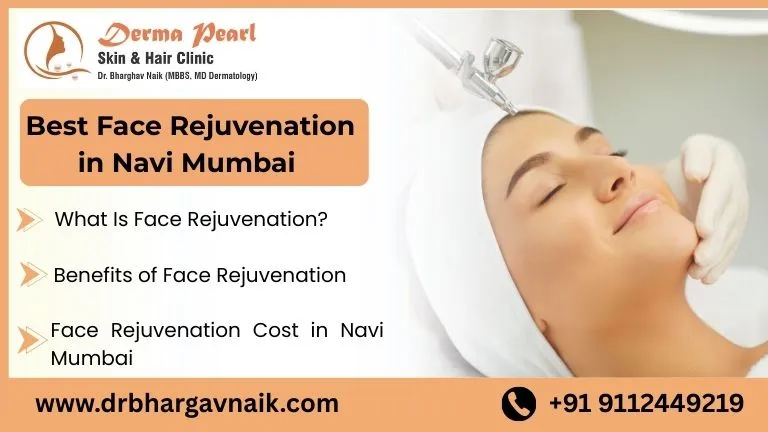
Blogs Face Rejuvenation: Treatments, Benefits, and Cost in Navi Mumbai Healthy, clear, and glowing skin reflects overall wellbeing, confidence, and youthfulness. However, as time passes, environmental factors, lifestyle habits, stress, and natural aging begin to show on the face. Fine lines, pigmentation, uneven skin tone, open pores, dullness, and acne marks become more noticeable. Face rejuvenation treatments are designed to address these issues, helping skin look smoother, brighter, and healthier while preserving natural features. What Is Face Rejuvenation? Face rejuvenation refers to dermatological treatments that restore skin health and appearance. Unlike cosmetic procedures that dramatically alter facial features, these treatments focus on improving the skin’s quality. They enhance texture, hydration, elasticity, and tone while reducing fine lines, age spots, acne scars, and dullness. Face rejuvenation can be used to maintain youthful skin, correct visible damage, or prepare the skin for special occasions. All treatments are safe, medically approved, and performed under the supervision of qualified dermatologists. Causes of Facial Pigmentation Pigmentation occurs when the skin produces excess melanin, the natural pigment responsible for skin color. Several factors contribute to increased melanin production: Sun Exposure: UV rays are the most common cause of pigmentation. Sunscreen and protective clothing are essential for prevention. Hormonal Changes: Pregnancy, PCOS, thyroid disorders, and hormonal medications can stimulate excess melanin production, resulting in pigmentation. Skin Injuries or Acne: Healing from acne, cuts, burns, or other skin injuries can leave dark spots that persist without proper treatment. Genetics: Individuals with a family history of pigmentation are more likely to develop similar issues. Lifestyle Factors: Stress, poor diet, lack of hydration, and inconsistent skincare routines can worsen pigmentation over time. Common Face Rejuvenation Treatments Chemical Peels Chemical peels involve applying a specially formulated solution to remove dead skin layers and stimulate new cell growth. They are effective in treating pigmentation, acne marks, sun damage, uneven skin tone, and mild fine lines. Depending on the depth of the peel, results can be seen gradually over multiple sessions. Regular chemical peels make skin smoother, brighter, and more evenly toned, improving overall texture. HydraFacial HydraFacial is a non-invasive treatment that cleanses, exfoliates, and hydrates the skin while removing impurities and infusing nourishing serums. It helps reduce excess oil, minimize pores, smoothen texture, and restore hydration. HydraFacial delivers an immediate glow, making it ideal for dull skin or as a pre-event treatment. Multiple sessions help maintain long-term skin health and radiance. Microneedling Microneedling uses tiny needles to create microchannels in the skin, which stimulate collagen production and enhance repair. It addresses acne scars, open pores, fine lines, stretch marks, and rough skin texture. Over time, the skin becomes firmer, smoother, and more resilient. Microneedling is suitable for most skin types and can be combined with serums or PRP (platelet-rich plasma) for enhanced results. Laser Treatments Laser treatments target deeper skin concerns such as pigmentation, sun spots, acne scars, birthmarks, and mild sagging. They improve overall skin tone and texture and stimulate collagen formation. Depending on the condition, multiple sessions may be required. Laser treatments are precise, safe, and suitable for both maintenance and corrective purposes. Anti-Ageing Treatments Anti-ageing procedures like Botox, dermal fillers, skin boosters, and collagen-stimulating injectables help reduce wrinkles, restore volume, and tighten sagging areas. These treatments produce natural-looking results when performed by trained dermatologists and are often combined with other rejuvenation procedures for a more comprehensive effect. Benefits of Face Rejuvenation Face rejuvenation improves the overall quality and appearance of skin. The benefits include brighter and even-toned skin, smoother texture, improved hydration, reduced fine lines, and decreased pigmentation. Over time, regular treatments can slow down visible signs of aging and make skin more resilient. Beyond physical appearance, improved skin health also contributes to higher self-confidence and a refreshed, youthful look. Ready for Smoother, Brighter Skin? Book Your Face Rejuvenation Session Today! 093266 51151 bhargav30naik@gmail.com Who Should Consider Face Rejuvenation? Face rejuvenation is suitable for almost anyone looking to improve their skin’s health and appearance. It is particularly helpful for individuals with dull or tired skin, uneven pigmentation, acne scars, early fine lines, enlarged pores, dry or dehydrated skin, or sun-damaged areas. Dermatologists provide personalized assessments and recommend treatments based on skin type, age, lifestyle, and specific concerns to achieve the best results safely. Face Rejuvenation Cost in Navi Mumbai The cost of face rejuvenation varies depending on the treatment type, number of sessions, and complexity. Chemical peels typically range from ₹1,000 to ₹3,000 per session, while HydraFacial sessions cost between ₹2,500 and ₹6,000. Microneedling ranges from ₹3,000 to ₹7,000, and laser treatments can cost between ₹2,000 and ₹15,000 depending on the area and condition. Anti-ageing procedures such as Botox or dermal fillers usually start from ₹5,000. A dermatologist will create a treatment plan tailored to individual needs and budget, ensuring cost-effective results without compromising safety or quality. Why Choose Derma Pearl Skin & Hair Clinic in Navi Mumbai? Derma Pearl Skin & Hair Clinic is a trusted destination for face rejuvenation in Navi Mumbai. The dermatologists assess each patient’s skin thoroughly and recommend treatments that are safe, effective, and customized to individual requirements. The clinic uses modern, advanced equipment for chemical peels, HydraFacial, microneedling, laser treatments, and anti-ageing procedures. Patients receive honest guidance with no unnecessary treatments, along with clear post-treatment instructions to maintain results. With a hygienic and comfortable environment, Derma Pearl focuses on improving skin health naturally, effectively, and safely. Conclusion Face rejuvenation treatments help restore skin health, smoothness, and brightness while addressing early signs of aging. When performed under the guidance of experienced dermatologists, these treatments improve the overall appearance and texture of the skin without altering natural features. Combined with regular maintenance, proper skincare, and sun protection, face rejuvenation can deliver long-lasting, natural-looking results that make skin look refreshed, youthful, and healthy. FAQs Is face rejuvenation safe? Yes, it is safe when performed by trained dermatologists using approved equipment and techniques. When will I see results? A noticeable glow may appear after the first session, while significant improvements typically require 3-6 sessions depending on
Pigmentation Removal Treatments in Navi Mumbai
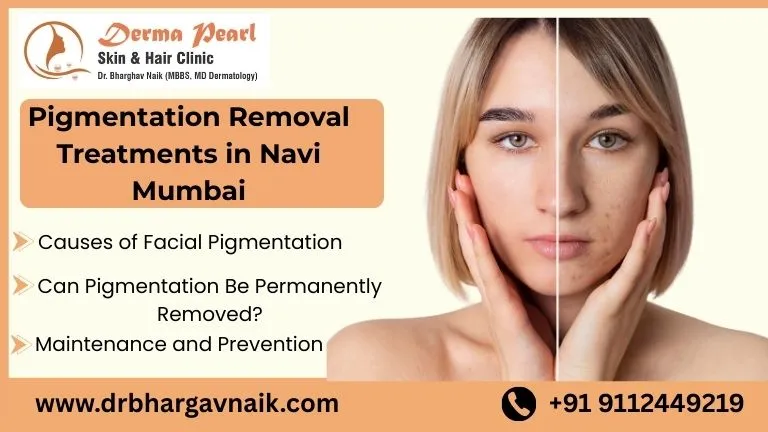
Blogs Pigmentation Removal Treatments in Navi Mumbai Facial pigmentation, including dark spots, brown patches, and uneven skin tone, is a common concern affecting people of all ages and skin types. Sun exposure, hormonal changes, acne marks, and genetics are primary contributors to pigmentation. While these marks do not usually affect health, they can impact confidence and appearance. Modern dermatology offers effective, safe, and advanced solutions to treat pigmentation, restore clarity, and achieve a more even, radiant complexion. Choosing the right clinic is critical, as proper treatment depends on skin type, pigmentation type, and lifestyle factors. Types of Facial Pigmentation Understanding the type of pigmentation is important for effective treatment. Facial pigmentation can appear differently on each person, and each type responds to specific treatments. 1. Melasma Melasma is characterized by grey-brown patches on the cheeks, forehead, or upper lip. It is often triggered by hormonal changes during pregnancy, thyroid issues, or use of birth control pills. Sun exposure tends to worsen melasma, making it essential to combine treatment with proper sun protection. 2. Sunspots / Age Spots Sunspots, also called age spots, appear as small brown marks caused by prolonged sun exposure. They are common in adults but can also affect younger people with frequent outdoor activity. These spots are generally superficial and respond well to professional treatments. 3. Post-Inflammatory Hyperpigmentation (PIH) PIH develops after skin inflammation caused by acne, cuts, burns, or rashes. As the skin heals, dark marks may form and remain visible without proper care. PIH is particularly common among teenagers and young adults who experience acne or minor skin injuries. Causes of Facial Pigmentation Pigmentation occurs when the skin produces excess melanin, the natural pigment responsible for skin color. Several factors contribute to increased melanin production: Sun Exposure: UV rays are the most common cause of pigmentation. Sunscreen and protective clothing are essential for prevention. Hormonal Changes: Pregnancy, PCOS, thyroid disorders, and hormonal medications can stimulate excess melanin production, resulting in pigmentation. Skin Injuries or Acne: Healing from acne, cuts, burns, or other skin injuries can leave dark spots that persist without proper treatment. Genetics: Individuals with a family history of pigmentation are more likely to develop similar issues. Lifestyle Factors: Stress, poor diet, lack of hydration, and inconsistent skincare routines can worsen pigmentation over time. Professional Treatments for Pigmentation Removal Proper treatment of pigmentation requires professional guidance. Dermatologists assess skin type, pigmentation type, and severity before recommending a suitable plan. Common treatments include: Chemical Peels Chemical peels use skin-friendly acids to remove the pigmented outer layers of the skin. They promote the growth of new, healthy skin and improve overall texture. Chemical peels are effective for mild to moderate pigmentation and can be customized based on the patient’s skin type. Laser Pigmentation Removal Laser treatments precisely target melanin, breaking it down for natural fading of dark spots. This method is particularly effective for stubborn melasma, sunspots, and deeper pigmentation. Multiple sessions may be required, and results are typically visible after a few treatments. Prescription Creams Topical creams containing vitamin C, kojic acid, azelaic acid, or retinoids are commonly prescribed to gradually lighten dark spots. These creams are safe when used as directed by a dermatologist and are often combined with other treatments for best results. Microdermabrasion / Dermabrasion These procedures exfoliate the skin surface, removing dead skin cells and helping fade pigmentation over time. They improve skin texture, brightness, and overall appearance. Skin Brightening & Booster Treatments While these treatments do not directly remove pigmentation, they enhance skin health, hydration, and radiance. The skin appears more even-toned and glowing, complementing other pigmentation treatments. Can Pigmentation Be Permanently Removed? Pigmentation can be significantly reduced or eliminated with the right dermatologist-guided treatments. However, long-term results depend on proper maintenance. Daily sunscreen, a consistent skincare routine, and follow-up sessions are essential to prevent recurrence. Without these, pigmentation may return due to sun exposure, hormonal fluctuations, or lifestyle factors. Pigmentation can be compared to dust on a surface: thorough cleaning removes it, but without regular upkeep, it eventually comes back. Ready for Brighter, Clearer Skin? Book Your Pigmentation Session Today! 093266 51151 bhargav30naik@gmail.com Maintenance and Prevention Maintaining results after pigmentation treatment is critical. Dermatologists recommend: Daily Sunscreen: SPF 30+ or 50+, reapplied every 3–4 hours to protect against UV damage. Consistent Skincare Routine: Cleanser → Serum → Moisturizer → Sunscreen to keep skin healthy. Avoid Picking or Squeezing Pimples: Picking can cause new dark marks to form. Balanced Diet and Hydration: A diet rich in fruits, vegetables, nuts, and water supports skin health. Follow Dermatologist Instructions: Consistent use of prescribed creams or treatments is more effective than occasional use. Factors That Can Worsen Pigmentation Prolonged sun exposure without protection Using harsh scrubs or unregulated steroid creams Heat exposure from saunas, hot showers, or cooking Stress, sleep deprivation, or poor lifestyle habits Over-exfoliating or not removing makeup properly Why Choose Derma Pearl Skin & Hair Clinic in Navi Mumbai? Derma Pearl Skin & Hair Clinic offers advanced pigmentation removal treatments with a focus on safety, effectiveness, and personalization. Expert dermatologists evaluate each patient’s skin and create a customized treatment plan. The clinic uses modern technologies such as lasers, chemical peels, and microdermabrasion for optimal results. Patients benefit from an honest approach, realistic expectations, and post-treatment guidance to maintain healthy, clear, and glowing skin. Conclusion Pigmentation can be treated effectively with professional care, proper treatments, and consistent maintenance. With expert guidance, patients can achieve clearer, brighter, and more even-toned skin. Maintaining results requires daily sun protection, a proper skincare routine, and regular follow-ups. Derma Pearl Skin & Hair Clinic in Navi Mumbai ensures safe, effective, and long-lasting pigmentation removal solutions, helping patients feel confident and radiant in their natural skin. FAQs How long does pigmentation removal take? Treatment duration depends on the type and severity of pigmentation and can range from 4 weeks to 3 months. Is laser pigmentation removal painful? Most patients experience mild sensations similar to warm pinches, which are generally well-tolerated. Can home remedies fully remove pigmentation?
What Is Skin Rejuvenation Treatment?
Blogs What Is Skin Rejuvenation Treatment? Our skin faces many challenges every day — sun, dust, pollution, stress, and aging. Over time, these factors can make the skin look dull, tired, or uneven. Skin rejuvenation treatment is a modern skincare solution that helps bring back your skin’s natural glow and health. It works to repair damage, refresh skin cells, and improve your overall appearance. In simple words, skin rejuvenation means making your skin look young and healthy again. It includes a set of treatments that target wrinkles, spots, acne marks, or uneven tone to make your skin smoother and brighter. At Dharma Pearl Skin and Hair Clinic in Navi Mumbai, the team of expert dermatologists understands that every skin is unique. So, they create customized skin rejuvenation plans that fit your skin type and concern — whether it’s for hydration, glow, or anti-aging care. Skin Rejuvenation Treatments at Dharma Pearl Skin and Hair Clinic There isn’t just one type of skin rejuvenation treatment — there are many, and each has its own benefits. The doctors at Dharma Pearl Skin and Hair Clinic use advanced technologies and safe methods to ensure your skin gets the best possible care. Here are some of the most common skin rejuvenation treatments offered: 1. Chemical Peels Chemical peels target a variety of skin issues, including acne scars, uneven tone, fine lines, pigmentation, and tanning. 2. Laser Skin Rejuvenation Laser treatments use focused light to remove damaged layers of skin and boost collagen production. This helps in reducing wrinkles, age spots, and pigmentation. At Dharma Pearl Skin and Hair Clinic, advanced laser machines ensure safe and painless results. 3. Microneedling Microneedling is a procedure where tiny needles create micro-injuries on the skin. This encourages the body to produce more collagen — the protein responsible for firm and youthful skin. It’s excellent for acne scars and skin tightening. 4. HydraFacial Microneedling is a procedure where tiny needles create micro-injuries on the skin. This encourages the body to produce more collagen — the protein responsible for firm and youthful skin. It’s excellent for acne scars and skin tightening. 5. PRP (Platelet Rich Plasma) Therapy PRP uses your own blood’s healing factors to repair and refresh the skin. It’s a natural way to rejuvenate your face, reduce fine lines, and improve skin texture. It’s often called the “vampire facial,” but it’s completely safe when done by trained dermatologists. These treatments can be used alone or in combination, depending on your skin’s needs and goals. Benefits of Skin Rejuvenation Skin rejuvenation is not just about beauty — it’s about healthy skin. Here are some key benefits of getting this treatment at Dharma Pearl Skin and Hair Clinic, Navi Mumbai: Younger-Looking Skin: The treatments help reduce wrinkles, fine lines, and sagging, making your skin appear youthful. Even Skin Tone: They fade pigmentation, acne scars, and dark spots, giving your face a smooth tone. Improved Texture: The procedures help remove dead cells and roughness, leaving your skin soft and supple. Boosted Confidence: When your skin looks fresh and glowing, you naturally feel more confident. Long-Term Health: Many treatments stimulate collagen and cell turnover, improving your skin’s natural strength and elasticity over time. Customizable: Each person’s skin is different, so the doctor can design a plan that suits your exact needs — whether it’s hydration, glow, or anti-aging care. At Dharma Pearl, the approach is scientific yet gentle — combining technology with care to deliver real results. Skin Rejuvenation vs. Skin Resurfacing Many people confuse skin rejuvenation with skin resurfacing, but they are slightly different. Skin rejuvenation is a broad term that includes any treatment aimed at improving the overall health and appearance of the skin. It can be gentle or intensive, depending on your needs. Skin resurfacing, on the other hand, is more specific — it removes the outer layers of damaged skin to reveal new skin underneath. Laser treatments and chemical peels are examples of resurfacing. Here’s a simple way to understand it: Aspect Skin Rejuvenation Skin Resurfacing Purpose To refresh, repair, and hydrate the skin To remove damaged skin layers Techniques Facials, PRP, microneedling, laser, etc. Laser resurfacing, deep peels Downtime Usually minimal Can have some downtime Results Gradual, natural glow Deeper transformation for texture and scars Both work beautifully together. In fact, dermatologists at Dharma Pearl Skin and Hair Clinic often recommend combining them for the best results — depending on your skin type and concern. How Often Should You Get Skin Rejuvenation Treatments? This depends on your skin condition, age, and lifestyle. Generally: Mild treatments like HydraFacials or light chemical peels can be done once every 3–4 weeks. Medium treatments like microneedling or PRP can be done every 2–3 months. Advanced treatments like laser rejuvenation are often done every 6–12 months. However, your dermatologist will create a plan that fits your skin perfectly. At Dharma Pearl Skin and Hair Clinic, the experts guide you about how many sessions you need and the best intervals between them. It’s important to remember: regular skincare and sunscreen are just as important as your treatment sessions. Taking care of your skin daily helps maintain those beautiful results longer. Ready to Refresh Your Skin? Book a Quick Consultation Today! 093266 51151 bhargav30naik@gmail.com Skin Rejuvenation Cost in Navi Mumbai Now, the most common question — what is the skin rejuvenation cost in Navi Mumbai? The cost of skin rejuvenation treatments can vary widely based on: The type of treatment (laser, chemical peel, PRP, microneedling, etc.) The number of sessions required The technology and equipment used The area of treatment (face, neck, hands, etc.) The expertise of the dermatologist On average, in Navi Mumbai, the skin rejuvenation cost can range from: ₹1,500 to ₹4,000 per session for basic facials or peels ₹5,000 to ₹10,000 per session for microneedling or PRP ₹10,000 to ₹25,000 per session for advanced laser rejuvenation treatments At Dharma Pearl Skin and Hair Clinic, the prices are transparent and fair. You get personalized care using advanced technology under expert supervision —
Chemical Peel Price & Treatment in Navi Mumbai | Derma Pearl
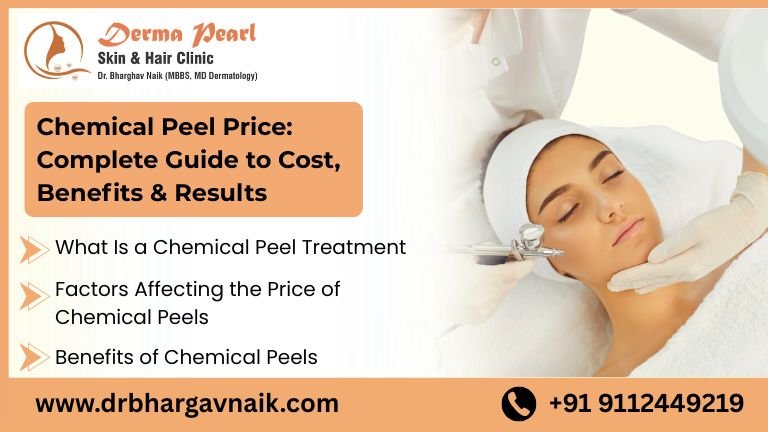
Blogs Chemical Peel Price: Complete Guide to Cost, Benefits & Results Chemical peels are among the most popular skincare treatments for achieving smooth, glowing, and youthful skin. Whether you’re dealing with acne scars, pigmentation, tanning, or dullness a chemical peel can safely and effectively renew your skin. One of the most common questions patients ask is, “What is the price of a chemical peel?” This guide explains how chemical peels work, factors affecting their cost, what results you can expect, and why choosing the right clinic like Derma Pearl Skin & Hair Clinic in Navi Mumbai is essential for the best outcomes. What Is a Chemical Peel Treatment A chemical peel is a cosmetic procedure that uses mild chemical solutions to remove the top layer of damaged skin. This process stimulates the growth of new, healthy skin cells, giving you a smoother and brighter complexion. The Main Goal of Chemical Peels Chemical peels target a variety of skin issues, including acne scars, uneven tone, fine lines, pigmentation, and tanning. What Makes Chemical Peels So Popular Chemical peels are highly popular because they are affordable, effective, and minimally invasive. They deliver noticeable improvements in a short time and require little to no recovery period. Chemical Peel Before and After Before treatment, skin may appear uneven or pigmented. After a peel, patients often notice visible improvements such as smoother texture, brightness, and a healthy glow. How Chemical Peels Work – The Science Behind the Treatment Chemical peels use ingredients like glycolic acid, lactic acid, or salicylic acid to gently exfoliate the top layers of the skin. This controlled removal encourages regeneration and boosts collagen production, improving both texture and tone. The Chemical Peel Process Day by Day Day 1: Skin feels tight and slightly red. Day 2–3: Mild peeling or flaking begins. Day 4–5: New, healthy skin starts to appear. Day 6–7: Skin looks smooth, clear, and rejuvenated. Who Is a Good Candidate for Chemical Peels You may be a suitable candidate for a chemical peel if you have acne scars, pigmentation, sun damage, or dullness. Those with very sensitive or broken skin should consult a dermatologist before treatment. If you want healthier, smoother skin, you can book a consultation with Dr. Bhargav Naik today. 093266 51151 bhargav30naik@gmail.com Factors Affecting the Price of Chemical Peels The chemical peel price varies depending on the type of peel, treatment area, clinic expertise, and number of sessions required. Example In Navi Mumbai, the average chemical peel cost ranges from ₹1,500 to ₹10,000 per session, depending on depth and peel type. Benefits of Chemical Peels Brighter, smoother skin Reduction in acne scars and pigmentation Minimized wrinkles and fine lines Even skin tone and improved texture Boosted collagen production The chemical peel price varies depending on the type of peel, treatment area, clinic expertise, and number of sessions required. Chemical Peel for Skin Lightening and Whitening Chemical peels help reduce melanin buildup, promoting skin lightening and a more even skin tone. What to Expect During and After a Peel During treatment, a mild solution is applied for a few minutes. You may feel a tingling sensation, which is normal. Afterward, the skin may appear slightly red or tight. Aftercare and Recovery Avoid direct sunlight; always apply sunscreen. Keep skin moisturized. Don’t pick or peel flaking skin. Follow dermatologist’s aftercare plan. Treatment of Hyperpigmentation, Acne Scars, and Wrinkles Chemical peels treat various skin issues effectively: Hyperpigmentation: Reduces uneven tone. Acne scars: Stimulates new collagen. Wrinkles: Improves elasticity and texture. Best Chemical Peel for Hyperpigmentation For deeper pigmentation, TCA or glycolic acid peels are most effective due to their deeper exfoliation. Chemical Peel Price Based on Strength Light Chemical Peel Ideal for mild acne and dullness ₹1,500 – ₹3,000 per session Medium Chemical Peel Suitable for acne scars and pigmentation ₹3,000 – ₹6,000 per session Deep Chemical Peel For deep scars and stubborn pigmentation ₹6,000 – ₹10,000+ per session Detailed Breakdown of Chemical Peel Types and Their Suitability Light Chemical Peel Glycolic Acid Peel: For glow and tan removal Lactic Acid Peel: Gentle and hydrating Salicylic Acid Peel: For oily, acne-prone skin TCA Peel: For pigmentation and wrinkles Lip Peel: For dark or pigmented lips Chemical Peel Treatment Price in Navi Mumbai At Derma Pearl Skin & Hair Clinic, the chemical peel price starts at ₹2,000 and varies with skin condition and peel type. Our dermatologists ensure safe, customized, and result-driven treatments. Short-Term vs. Long-Term Expenses While each session has a cost, long-term benefits such as improved tone and smoothness make chemical peels a worthwhile investment. Is the Chemical Peel Worth the Cost Absolutely. When done by professionals, chemical peels provide lasting brightness and confidence. Why Choose Derma Pearl Skin & Hair Clinic At Derma Pearl Skin & Hair Clinic, every peel is done under expert supervision using high-quality products and precise techniques. You’ll receive: Personalized consultations Safe, science-based treatments Advanced skincare technology Focused care for pigmentation, acne, and tan removal Lip Peel: For dark or pigmented lips Conclusion Chemical peels are safe, effective, and deliver remarkable improvements in texture, tone, and radiance. Though chemical peel price varies, expert-led treatment ensures maximum value and visible results. For glowing skin and professional care, trust Derma Pearl Skin & Hair Clinic in Navi Mumbai. FAQs How many sessions are needed for glowing skin? 4–6 sessions spaced 2–3 weeks apart give optimal results. Is a chemical peel painful? No, only mild tingling may occur. Can chemical peels treat dark circles or lip pigmentation? Yes, specific chemical peels for dark circles and chemical peels for lips are available. How long do results last? Results can last for several months with good skincare. Can chemical peels be done at home? No, always consult a certified dermatologist for safety. 4–6 sessions spaced 2–3 weeks apart give optimal results. No, only mild tingling may occur. Yes, specific chemical peels for dark circles and chemical peels for lips are available. Results can last for several months with good skincare. No, always consult a certified dermatologist for
Sensitive Skin Care Routine: Calm, Protect & Glow Naturally
Blogs Sensitive Skin Care Routine: Proven Tips to Calm, Protect, and Glow Naturally Having sensitive skin can feel like walking a tightrope one wrong product or ingredient and your skin reacts instantly. Whether you deal with redness, irritation, dryness, or stinging sensations, understanding your skin and adopting the right skincare for sensitive skin can transform its health and glow. In this detailed guide, we’ll explore what makes skin sensitive, the best skincare routine for sensitive skin, proven tips, and dermatologist-recommended habits to help you calm, protect, and glow naturally. What Is Sensitive Skin? Sensitive skin isn’t a medical condition; it’s a skin type characterized by heightened reactivity to environmental factors, cosmetic products, or internal changes. People with sensitive skin often experience: Redness or flushing after cleansing or applying skincare Burning or stinging sensations Dryness and rough patches Breakouts or itchiness from fragrance or certain ingredients Daily Skincare Routine for Sensitive Skin A consistent, gentle routine is the foundation of healthy, balanced skin. Here’s a dermatologist-approved step-by-step skincare routine for sensitive skin that minimizes irritation and promotes healing. Morning Routine 1. Gentle Cleanser Choose a fragrance-free, sulfate-free cleanser that won’t strip your skin’s natural oils. Look for ingredients like ceramides, glycerin, or aloe vera that cleanse while soothing. 2. Hydrating Toner or Mist If your skin tolerates it, use an alcohol-free toner with calming ingredients like rose water or chamomile extract. This helps balance your pH and prep your skin for hydration. 3. Lightweight Moisturizer Hydration is key to maintaining your skin barrier. Pick a hypoallergenic, non-comedogenic moisturizer with hyaluronic acid and squalane. 4. Sunscreen Never skip sunscreen! UV rays can worsen irritation and redness. Choose a mineral-based sunscreen with zinc oxide or titanium dioxide, which are less likely to cause reactions. Night Routine 1. Double Cleanse If you wear makeup or sunscreen, start with a gentle micellar water to remove debris, followed by your regular mild cleanser. 2. Soothing Serum At night, use serums containing niacinamide, panthenol (Vitamin B5), or centella asiatica (cica) — they reduce redness and repair the skin barrier. 3. Barrier-Repair Moisturizer Nighttime is when your skin heals. Opt for a richer cream with ceramides, fatty acids, and peptides for intense repair. 4. Avoid Over-Exfoliation Limit exfoliation to once every 10–14 days using PHA (polyhydroxy acids) or lactic acid, which are gentler on sensitive skin. Best Skincare Tips for Sensitive Skin Here are some dermatologist-backed skincare tips for sensitive skin to enhance your glow without irritation: 1. Patch Test New Products: Always test a product on your inner arm or behind the ear before applying it to your face. 2. Keep It Simple: Stick to a minimal routine — cleanser, moisturizer, and sunscreen are your essentials. 3. Avoid Fragrance & Alcohol: Choose fragrance-free and alcohol-free products. These are less likely to trigger irritation. 4. Hydrate Internally: Drink plenty of water and consume omega-3-rich foods to support skin hydration. 5. Use Lukewarm Water: Hot water can strip your skin’s oils, worsening dryness and redness. 6. Sleep & Stress Management: Stress can exacerbate inflammation and sensitivity; practice mindfulness or yoga for healthy skin. What Causes Sensitive Skin in Different Skin Types? Sensitive skin can coexist with other types — oily, dry, or combination. Let’s look at how each type behaves and what you can do. 1. Skincare for Oily Sensitive Skin People with oily yet sensitive skin often experience breakouts and irritation simultaneously. Use oil-free moisturizers with niacinamide to balance oil without drying. Avoid harsh acne treatments like benzoyl peroxide; opt for azelaic acid or tea tree extract instead. 2. Best Skincare for Dry Sensitive Skin Dry and sensitive skin lacks both moisture and oil. Use rich, creamy cleansers and barrier-repair creams with ceramides and shea butter. Avoid foaming cleansers and exfoliants that strip moisture. 3. Combination Sensitive Skin If your T-zone is oily but cheeks are dry, apply lightweight gel moisturizers on oily areas and richer creams on drier zones. Balance is key. Common Mistakes to Avoid with Sensitive Skin Even with the best intentions, some habits can worsen sensitivity. Avoid these common pitfalls: Over-Exfoliating: Too frequent scrubbing damages your barrier. Using Too Many Active Ingredients: Combining acids, retinol, and vitamin C can irritate sensitive skin. Ignoring Patch Tests: Every new product should be tested first. Sleeping with Makeup On: Makeup residues clog pores and trigger inflammation. Switching Products Too Often: Give your skin time to adapt — at least 2–3 weeks before judging results. Conclusion Caring for sensitive skin is about being gentle, consistent, and aware. By choosing the right skincare products for sensitive skin and following a dermatologist-recommended skincare routine for sensitive skin, you can protect your skin barrier and enjoy a natural, healthy glow. Whether you have oily sensitive skin or dry sensitive skin, remember — less is more, and consistency always wins. For expert skincare advice and personalized treatment plans, consult Dr. Bhargav Naik — your trusted dermatologist for healthy, glowing skin. FAQs About Skincare for Sensitive Skin How do I know if I have sensitive skin? If your skin often reacts with redness, stinging, or dryness after applying products or exposure to weather, you likely have sensitive skin. What are the best skincare products for sensitive skin? Look for products labeled “hypoallergenic,” “fragrance-free,” and “dermatologist-tested.” Brands like CeraVe, Avene, and La Roche-Posay offer excellent options. Can sensitive skin be oily or acne-prone? Yes. Sensitive skin refers to reactivity, not oil level. You can have oily sensitive skin, which needs gentle, non-comedogenic products. How can I calm irritated skin fast? Apply a cold compress, use a fragrance-free moisturizer with ceramides, and avoid exfoliation for a few days. What ingredients should I avoid? Avoid alcohol, fragrance, sulfates, parabens, and harsh acids like glycolic acid or strong retinoids. If your skin often reacts with redness, stinging, or dryness after applying products or exposure to weather, you likely have sensitive skin. Look for products labeled “hypoallergenic,” “fragrance-free,” and “dermatologist-tested.” Brands like CeraVe, Avene, and La Roche-Posay offer excellent options. Yes. Sensitive skin refers to reactivity, not
Laser Hair Removal Cost & Benefits Explained Simply
Blogs Laser Hair Removal Cost: Everything You Need to Know Unwanted hair can be annoying. Whether it’s on your face, arms, or legs, shaving or waxing again and again can be painful and time-consuming. That’s where laser hair removal comes to the rescue! It’s a modern, long-term way to get smooth, hair-free skin. In this blog, we’ll explain how laser hair removal works, what the laser hair removal cost is, what affects it, and why it’s becoming so popular among both men and women. Let’s begin! How Laser Hair Removal Works Laser hair removal uses a special beam of light (laser) to target hair follicles the tiny roots under your skin that grow hair. Here’s how it works in simple steps: The laser sends light energy into the hair follicle. The pigment (color) in the hair absorbs the light. The light turns into heat and damages the follicle. Once the follicle is weak, it can’t grow hair anymore or grows much slower. This method is safe, quick, and effective. It can be done on almost any body part, face, arms, legs, underarms, or even the bikini area. Unlike waxing, there’s no pulling, no cuts, and no sticky mess. The results also last much longer, sometimes even permanently! Average Cost Range per Session of Laser Hair Removal The laser hair removal cost depends on the area you’re treating and how many sessions you need. But let’s look at the average idea of what you can expect: Body Area Average Cost per Session (in ₹) Upper Lip ₹1,000 – ₹2,000 Underarms ₹2,000 – ₹3,000 Arms ₹3,000 – ₹5,000 Legs ₹5,000 – ₹7,000 Bikini Area ₹3,000 – ₹5,000 Face ₹3,000 – ₹6,000 Full Body ₹15,000 – ₹30,000 Most people need 6–8 sessions for the best results.So, while the laser hair removal cost may seem higher at first, it’s actually a long-term investment: you save money on waxing, razors, and salon visits over time. Common Laser Hair Removal Treatment Areas People choose laser hair removal for many different body areas. The most common ones include: Face : Upper lip, chin, and sideburns Underarms : Smooth arms with no razor burn or bumps Legs : A favorite among women for silky smooth legs Back and Chest : Common for men who want a cleaner look Bikini Area : For hygiene and confidence Basically, if the skin area has hair, it can usually be treated safely and comfortably. Factors That Can Affect the Cost of Laser Hair Removal Not everyone’s laser hair removal cost is the same. Here are a few factors that can change it: 1. Size of the Area Bigger areas like legs or back usually cost more than smaller areas such as the upper lip or underarms. 2. Hair and Skin Type Dark, thick hair absorbs laser energy better, which often gives faster results. Lighter hair or certain skin types may need more sessions. 3. Technology and Expertise Clinics using advanced machines and experienced dermatologists may charge more but they ensure safe, long-lasting results. When comparing prices, always check quality and safety over the lowest cost. It’s your skin so it deserves the best care! Approximate Cost for Full-Body Laser Hair Removal A full-body laser hair removal session usually covers the face, arms, legs, underarms, bikini area, chest, and back. On average, the full-body laser hair removal cost ranges from ₹15,000 to ₹30,000 per session, depending on your skin type, hair density, and laser technology used. Most people need around 6–8 sessions spaced 4–6 weeks apart. After that, only minor touch-ups are needed once or twice a year. So, if you add up all the waxing, threading, and shaving expenses for a year, laser treatment often turns out cheaper in the long run! What Are the Benefits of Laser Hair Removal? Laser hair removal isn’t just about smooth skin it comes with many amazing benefits: Long-Lasting Results After completing all sessions, many people see a permanent reduction in hair growth. Some never need to shave again! No Ingrown Hairs or Razor Cuts Unlike waxing or shaving, lasers don’t cause bumps, irritation, or ingrown hairs. Your skin stays soft and healthy. Saves Time and Boosts Confidence No more rushing to salons or hiding behind clothes. Laser treatment gives you the freedom to feel confident every day! Laser Hair Removal Procedure (Pre, During & Post) Getting laser hair removal is simple! Here’s what happens before, during, and after your session. Before the Procedure Avoid waxing or plucking 2–3 weeks before. Shave the area 24 hours before your appointment. Don’t apply lotion or makeup before the session. During the Procedure You’ll wear safety goggles to protect your eyes. The dermatologist will glide the laser over your skin. You may feel tiny zaps like a rubber band snap but it’s totally bearable. Cooling gel or air is used to make it more comfortable. After the Procedure Your skin might look a little red for a few hours (like a mild sunburn). Avoid direct sunlight and use sunscreen regularly. Don’t wax or pluck in between sessions. Shaving is okay. After a few days, you’ll notice your hair falling out naturally! What To Expect After Laser Hair Removal Treatment? After your session, your skin may feel slightly warm or pink, but that fades quickly. Within 1–2 weeks, the treated hairs start to shed this means the laser is working! New hair will grow thinner and lighter each time. With every session, hair growth reduces until you get long-lasting smoothness. It’s important to follow your dermatologist’s aftercare advice carefully for the best results and to avoid side effects. How Many Sessions Are Needed for Laser Hair Removal? Most people need about 6 to 8 sessions for the best outcome. The number can vary depending on your: Hair type (thick or fine) Skin tone Hormones Area treated Sessions are usually spaced 4–6 weeks apart, allowing new hair to enter the growth phase the only time lasers can effectively target them. Once you complete your sessions, you may only need 1–2